



Patient
Welcome to the patient area
This page provides all the answers if you have benefited from surgery with a KeriMedical implant.
Thumb anatomy
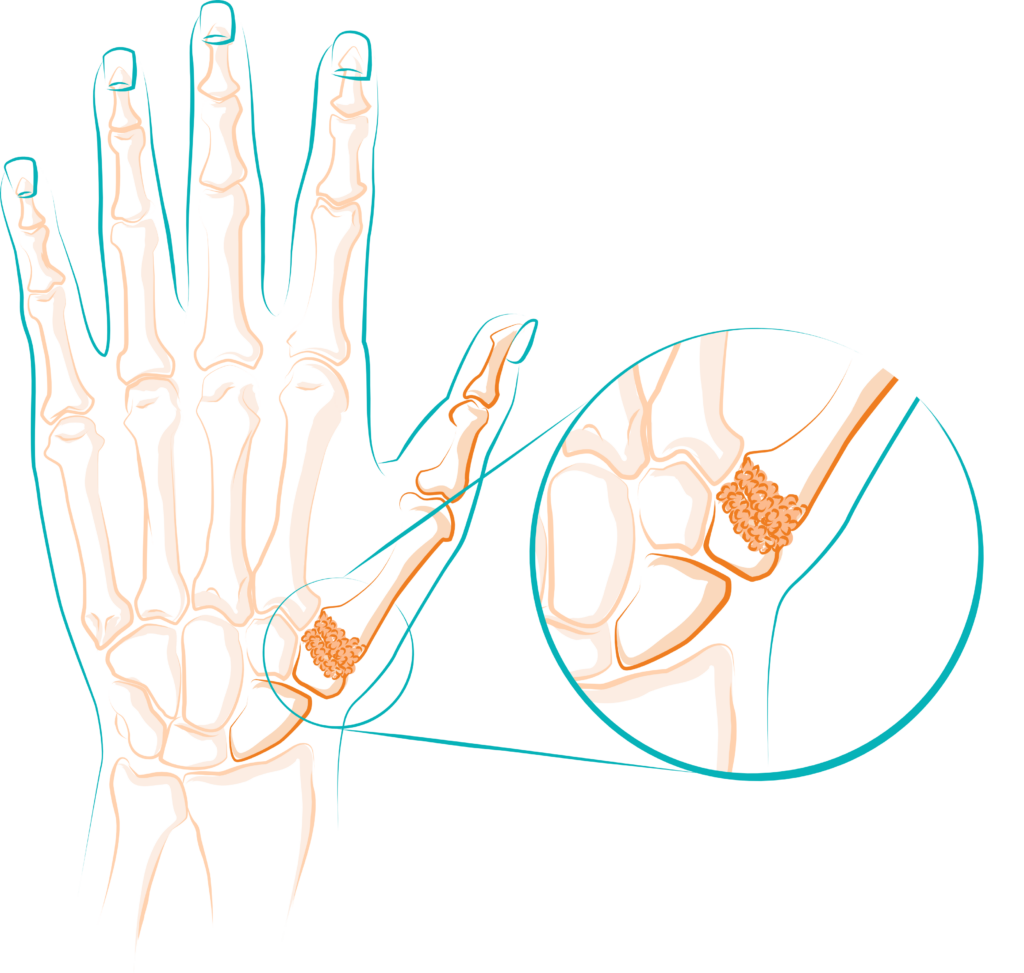
The thumb is what makes the human unique. It allows us to grasp, pinch, and hold objects and helps people interact with the world around them. At the base of the thumb is a small joint called the carpometacarpal (CMC) joint. This joint connects the long bone at the base of the thumb (metacarpal) to a bone in the wrist called the trapezium. The CMC joint at the base of the thumb is one of the most mobile joints in the body.
About thumb arthritis
Arthritis of the thumb CMC joint happens when this smooth cartilage wears down over time. As the protective surface becomes thinner, the bones begin to rub against each other. Over time, these repeated stresses can wear down the joint surface. This can cause pain, stiffness, swelling, and loss of grip strength. Thumb CMC arthritis is very common, especially in women over 40 and in people who have used their hands heavily through work or hobbies. While age and activity are the main causes, past injuries or joint looseness can also contribute.
About TOUCH®
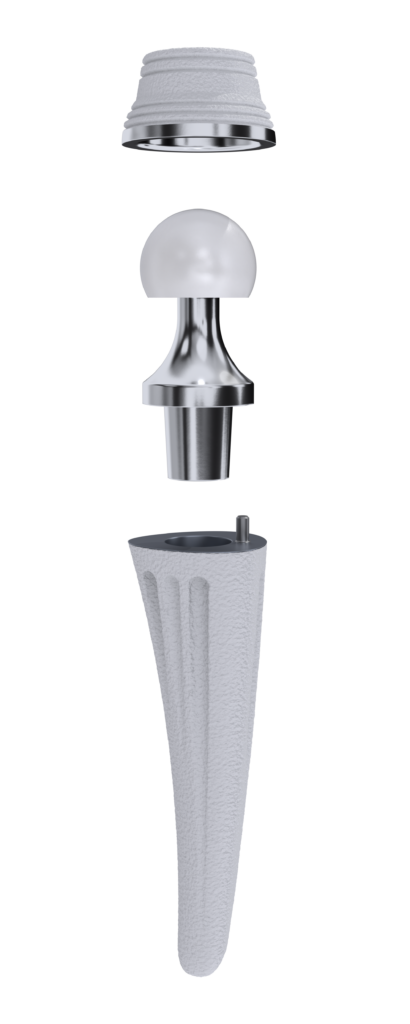
The TOUCH® CMC 1 prosthesis is a cementless, dual-mobility ball-and socket total CMC 1 joint replacement prosthesis. The prosthesis offers comprehensive clinical data support and incorporates dual mobility technology to enhance joint stability.
While new to the United States, this total joint replacement prosthesis has been in use in Europe over the past decade in the treatment of thumb arthritis.
The TOUCH® CMC 1 prosthesis addresses a critical clinical need in hand surgery, as the CMC 1 joint is amongst the most commonly affected by osteoarthritis.
It allows the thumb to move in many directions including up, down, across the palm, and in a circular motion. A smooth layer of cartilage covers the ends of the bones, helping the joint move easily and without pain.
Expected medical benefits
- Decrease of pain
- Reduction of functional disability
Potential undersirable effects
Patient should be informed about inherent limits and risks due to the prosthesis. Some complications can lead to a re-operation. In rare cases, the following adverse effects can appear after prosthesis implantation.
Related to any CMC 1 joint arthroplasty device:
- Allergic reaction
- Metallosis
- Osteolysis (Osseous resorption)
- Per-operative or post-operative fractures
- Calcification / Ossification
- Prosthetic components migration
- Prosthetic components loosening or unsealing
- Mechanical complications: implant breakage, disassembly or deformation, premature wear, intra-prosthetic conflicts, dislocation
- Functional complications: reduced range of motion, joint stiffness, painful limitations,
joint instability
Related to CMC 1 joint arthroplasty surgery:
- Early and/or late infection
- Hematoma
- Pain
- De Quervain Tenosynovitis, tendonitis
- Trigger Thumb
- Inflammatory or allergic reaction
- Surrounding soft tissues damages
- Neurological complications, Dysesthesia (decreased sensitivity)
- Acute (<3 months) complex regional pain syndrome (CRPS) 9|
Potential adverse effects related to CMC 1 joint arthroplasty surgery:
- Cutaneous necrosis
- Thrombosis, cardiovascular disorder
Treatment options
Not all cases of CMC arthritis cause pain or require treatment. In some people, symptoms may come and go or improve with time. However, when pain is persistent or interferes with daily tasks—like turning a key, opening a jar, or writing—treatment can help reduce discomfort and restore hand function.
Non-surgical treatment options
- Splints or braces to rest and protect the joint
- Activity changes to reduce stress on the thumb
- Anti-inflammatory medicines (NSAIDs) to decrease inflammation and pain.
- Steroid or anti-inflammatory injections into the CMC joint to decrease inflammation and pain.
Surgical treatment options
- CMC arthroscopy: A minimally-invasive technique that uses a small camera and instruments to view and treat the CMC joint in selected cases.
- Trapeziectomy: Removal of the trapezium bone to eliminate bone-on-bone contact between the trapezium and metacarpal.
- Ligament reconstruction or suspensionplasty: Tendon or implant are placed in the space of the removed trapezium to keep the thumb stable and maintain space after the trapezium is removed.
- Joint fusion: Permanent joining of the metacarpal and trapezium bones together to stop movement at the painful CMC joint, typically using plates and screws.
- Denervation: Cutting small pain-carrying nerves around the joint.
Other considerations
- MCP hyperflexion and Z-deformity can develop when arthritis changes thumb alignment. These may be corrected at the same time as the CMC procedures above, and may require additional incisions or reconstructions.
TOUCH® CMC 1 Prosthesis Information Guide
Learn more about thumb arthritis and the TOUCH® CMC 1 prosthesis with this information guide.
A Patient’s Story: Two Thumb Joint Replacements with TOUCH®
In this video, Trisha shares her experience living with thumb CMC arthritis and her journey with thumb joint replacement.
After receiving her first TOUCH® CMC 1 prosthesis, she experienced positive results and chose to undergo a second procedure on her other hand. Today, she has a TOUCH® implant in both thumbs, helping her regain mobility and continue her daily and professional activities.